

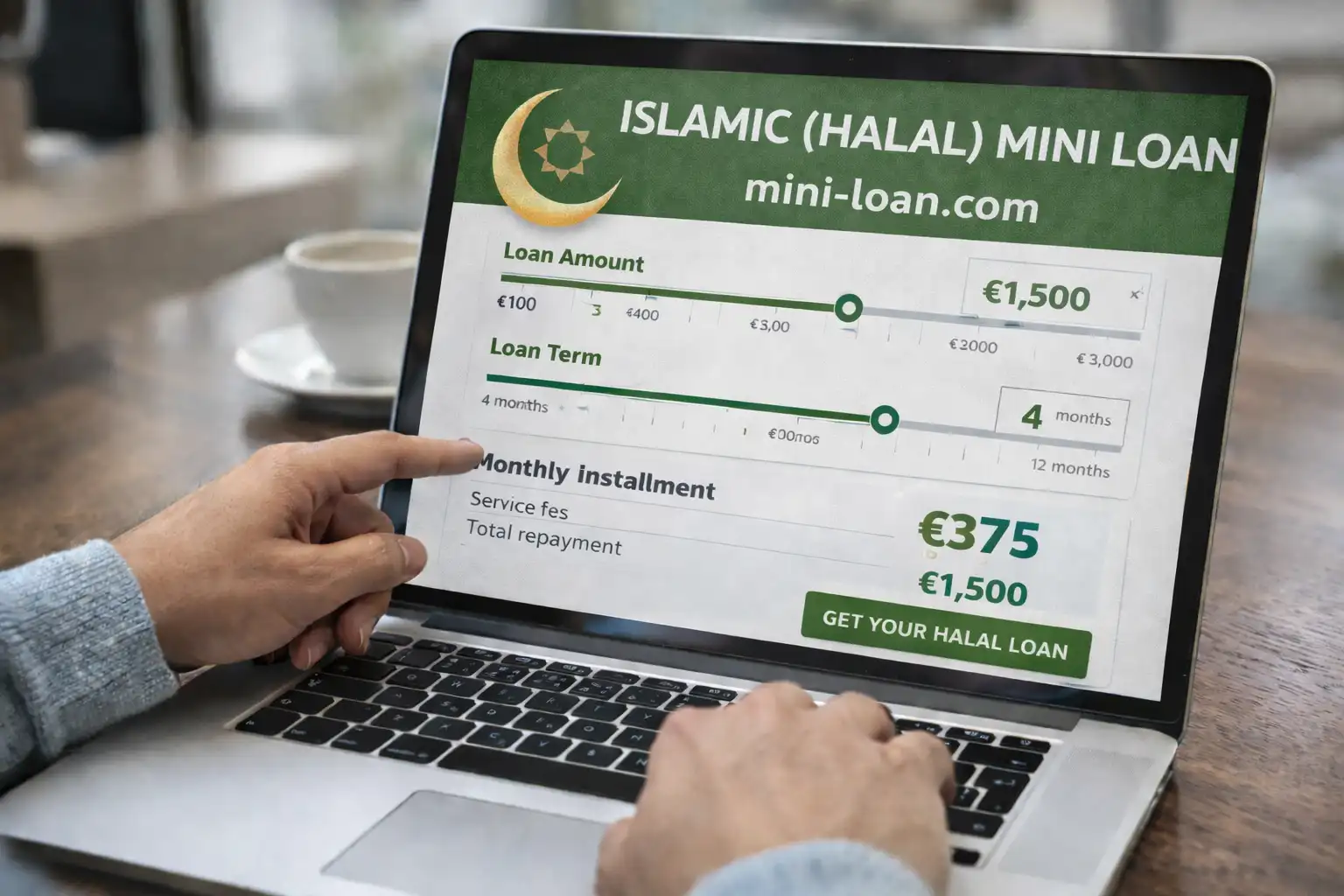
ISLAMIC MINI LOAN
An Islamic small loan is a Shariah-compliant financing arrangement structured without interest (riba). Instead of charging interest on borrowed money, the financing is based on permissible Islamic finance contracts such as Murabaha (cost-plus sale), Qard Hasan (benevolent loan), or Tawarruq (commodity-based structure).
The objective is to provide ethical access to modest funds while complying with Islamic financial principles.
Islamic small loan: Shariah principles, costs and eligibility
Undertsanding an Islamic small loan
What is considered an Islamic small loan
A small Shariah-compliant financing amount generally ranges between $500 and $15,000 (or equivalent currency), depending on the country and institution. Repayment terms typically vary from 3 to 36 months, structured as fixed installments under a transparent cost agreement rather than variable interest charges.
Objective and ethical foundation
The primary objective is to provide short- to medium-term liquidity for individuals who require financial support but seek to avoid conventional interest-based borrowing. Islamic small loans emphasize risk-sharing, transparency, asset-backing, and social responsibility, aligning financial needs with faith-based values.
How Islamic small loans function
Under a Murabaha structure, the institution purchases a good or commodity and resells it to the client at an agreed profit margin payable in installments. Under Qard Hasan, the borrower repays only the principal amount, though administrative fees may apply. The structure ensures clarity of total cost from the outset.
Expenses and bills that can be covered
Islamic small loans may be used for essential living expenses, medical treatment, education fees, small business tools, emergency repairs, household goods, halal business investment, or necessary travel. The financing must be used for lawful (halal) purposes consistent with Islamic principles.
Expenses that cannot be covered
Funds cannot be used for activities involving alcohol, gambling, interest-based refinancing, speculative trading, prohibited entertainment, or any activity considered non-compliant with Islamic law. Financial institutions typically require confirmation that the use of funds respects ethical guidelines.
Rates and profit margins applied
Instead of traditional APR, Islamic lenders apply a fixed profit margin or service fee agreed in advance. The equivalent cost range may effectively correspond to approximately 3% to 20% depending on structure, risk profile, and country regulations. Qard Hasan arrangements may charge minimal administrative fees only.
Other costs to consider
Borrowers may encounter processing fees, documentation fees, Shariah compliance supervision fees, late payment administrative penalties (which are often donated to charity rather than retained as profit), and optional takaful (Islamic insurance) contributions.
Eligibility and compliance requirements
Applicants must provide identification, proof of residency, bank account details, and affordability evidence. While interest is not charged, institutions still conduct credit and affordability assessments to ensure responsible financing. Some providers prioritize community-based lending or members of Islamic financial cooperatives.
Importance of comparing Islamic financing options
Comparing Islamic small loan providers helps borrowers understand total repayment obligations, contract type, profit transparency, and ethical compliance. Even within Shariah-compliant finance, structures and costs may vary significantly.
Alternative mini loan formats
Explore alternative small loan structures such as social, Islamic, P2P and lender list pages.